2026-10-15 ·
Factors That Affect Water Damage Restoration Costs in La Jolla
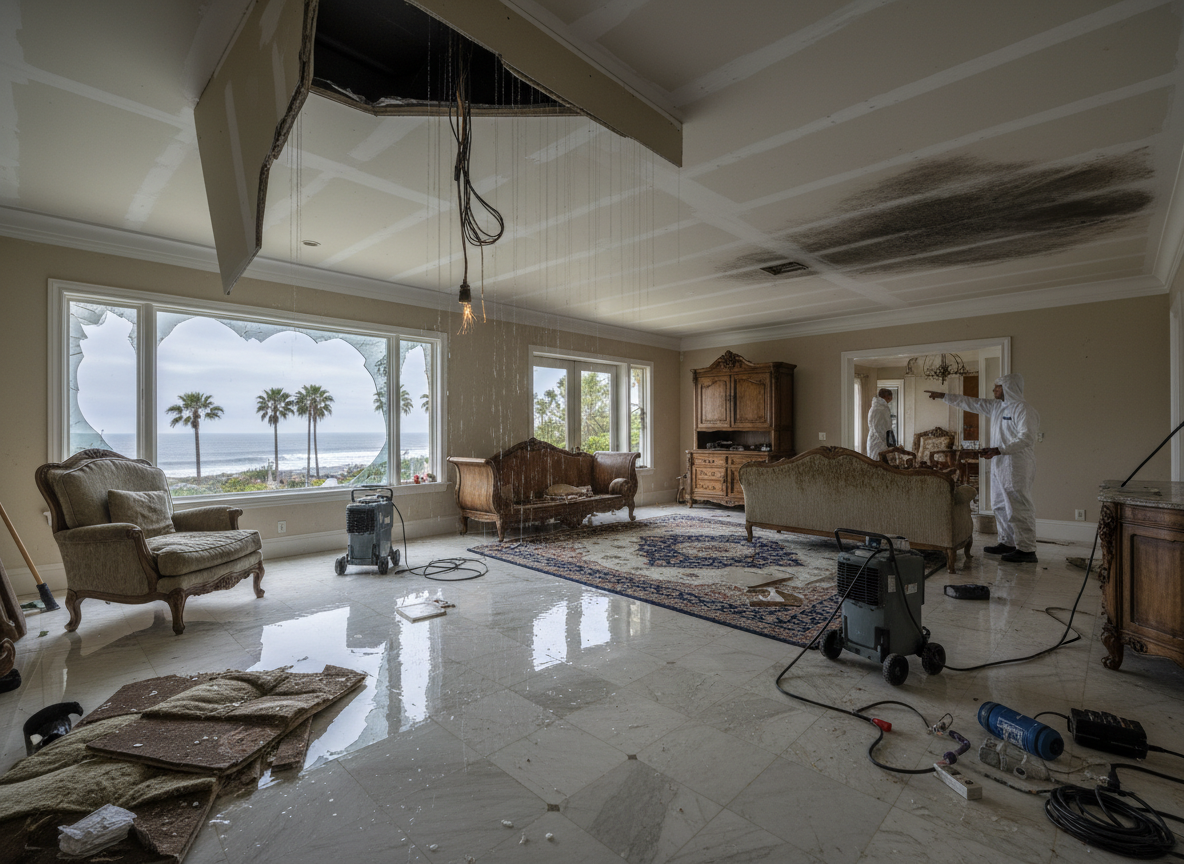
Water damage restoration costs in La Jolla vary based on the water category, affected square footage, access challenges in older coastal homes, and how quickly mitigation begins. Properties near La Jolla Cove or Scripps Pier face higher humidity that can extend drying times, while homes in the Muirlands or Upper La Jolla often sit on sloped lots that complicate extraction equipment placement.
Water Category and Contamination Level
Clean water from a burst supply line costs less to handle than gray water from appliances or black water from sewage backups. In La Jolla's mild Mediterranean climate, even small leaks can quickly pick up mold spores because summers stay cool and damp near the coast. Technicians classify the water on site before extraction begins. Category 3 water requires full containment and disposal protocols that add labor and equipment steps. Homeowners in Windansea or Torrey Pines see these distinctions matter most when ocean moisture already keeps indoor humidity elevated year-round.
Property Age and Construction Details
Many La Jolla homes built before 1970 feature plaster walls, single-pane windows, and slab foundations that trap moisture longer than newer builds. Bird Rock and La Jolla Village properties often have limited crawl space access, forcing crews to cut inspection openings rather than rely on standard moisture meters. San Diego County building styles along Mount Soledad also include hillside retaining walls that can channel rainwater toward foundations during rare winter storms. These details increase the time needed for thorough drying and raise material replacement costs when subfloors or framing must be removed.
Neighborhood Terrain and Access
Steep driveways in the Muirlands and narrow streets around La Jolla Shores Beach limit where large dehumidifiers and air movers can be staged. Crews working near UC San Diego or Birch Aquarium sometimes coordinate with campus security for after-hours equipment delivery. Coastal lots in La Jolla Shores experience salt air that corrodes metal components faster, so restoration plans include extra corrosion checks on HVAC systems. These access realities directly affect crew hours and whether specialized smaller equipment must be used instead of standard trailer units.
Response Time and Seasonal Conditions
Calling for emergency water removal within the first hour keeps costs lower by limiting how far moisture travels into drywall and insulation. La Jolla's rare but intense winter rain events can overwhelm gutters on older roofs, sending water into attics above La Jolla Village shops. Linking to guidance in Preparing La Jolla Properties for Winter Rain Events helps owners understand when to schedule pre-season inspections. Quick water damage mitigation prevents secondary issues that multiply expenses, especially when humidity from the Pacific keeps materials wet longer than inland San Diego areas.
Follow-Up Mold and Structural Risks
Unchecked moisture after initial extraction often leads to mold growth within 48 hours in La Jolla's coastal air. Handling Mold Risks After Leaks in Humid La Jolla Homes outlines inspection steps owners can take once visible water is gone. Properties in Del Mar and Solana Beach share similar humidity patterns, so the same drying standards apply when crews cross into those nearby cities. Final pricing always reflects whether hidden mold or warped subfloors require additional remediation beyond the original water event.