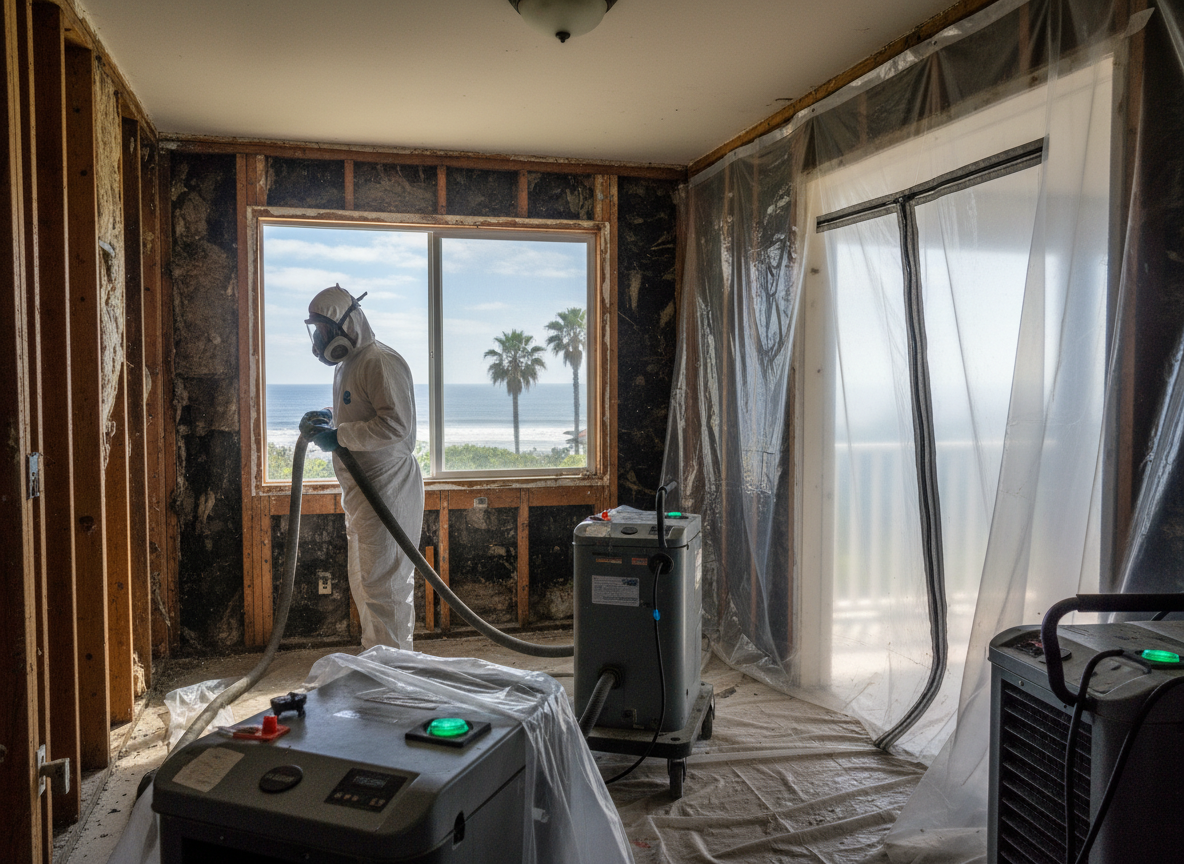
La Jolla's mild Mediterranean climate keeps humidity moderate most of the year, yet ocean fog and occasional heavy rains can push moisture into crawl spaces and wall cavities of older stucco homes built before modern vapor barriers. When a roof leak or appliance failure introduces water, mold colonies often establish within forty-eight hours on drywall, insulation, and wooden subfloors common in neighborhoods such as Upper La Jolla and the Muirlands. Remediation crews must separate affected materials from living spaces while protecting nearby finishes that homeowners want to preserve.
Coastal salt air accelerates corrosion on metal lath and HVAC components, so technicians inspect ductwork and registers in homes near La Jolla Cove or Scripps Pier even when visible water stayed upstairs. Containment barriers and negative air machines prevent spores from drifting into unaffected rooms, especially important in multi-story residences on the slopes around Mount Soledad. Post-remediation verification includes moisture meter readings on concrete slabs and wood framing to confirm levels match the dry standards required by San Diego County building guidelines.
Homeowners in La Jolla Shores and Windansea frequently discover hidden growth after king tides or winter storms push water under garage doors or through window wells. In these cases, crews remove saturated baseboards and insulation, then apply antimicrobial treatments only to porous materials that cannot be dried in place. Final clearance testing documents spore counts before any reconstruction begins, giving owners documented proof that the property meets habitability expectations before tenants or family return.
Technician insight
In La Jolla the thing that catches most people out with mold remediation after water damage is how quickly salt-laden air from the cove corrodes metal lath behind stucco in pre-1970 homes on the hills near Mount Soledad, turning a small ceiling stain into full-wall removal once we open the cavity.
Hidden Growth Behind Laundry Wall
A La Jolla Shores homeowner noticed musty odor after a washing-machine hose leak. We opened the wall and found colonies on the back of drywall and insulation extending into the adjacent bedroom closet. Containment was erected, wet materials removed, and drying completed over four days. Clearance testing confirmed spore levels returned to outdoor baseline before drywall replacement began.
How it works
- 1
Initial Assessment
Technicians arrive within hours, map moisture migration using meters, and identify all materials requiring removal in the affected La Jolla property.
- 2
Containment Setup
Plastic barriers and negative air machines isolate the work zone to keep spores from reaching unaffected areas such as living rooms or bedrooms.
- 3
Material Removal and Cleaning
Saturated drywall, insulation, and trim are cut out and bagged; remaining surfaces receive HEPA vacuuming and antimicrobial application where code allows.
- 4
Drying and Verification
Air movers and dehumidifiers run until moisture readings stabilize, followed by independent spore testing before any rebuild work starts.
Pricing
Cost depends on square footage affected, depth of hidden growth, and whether HVAC cleaning is required; written estimates provided after inspection.