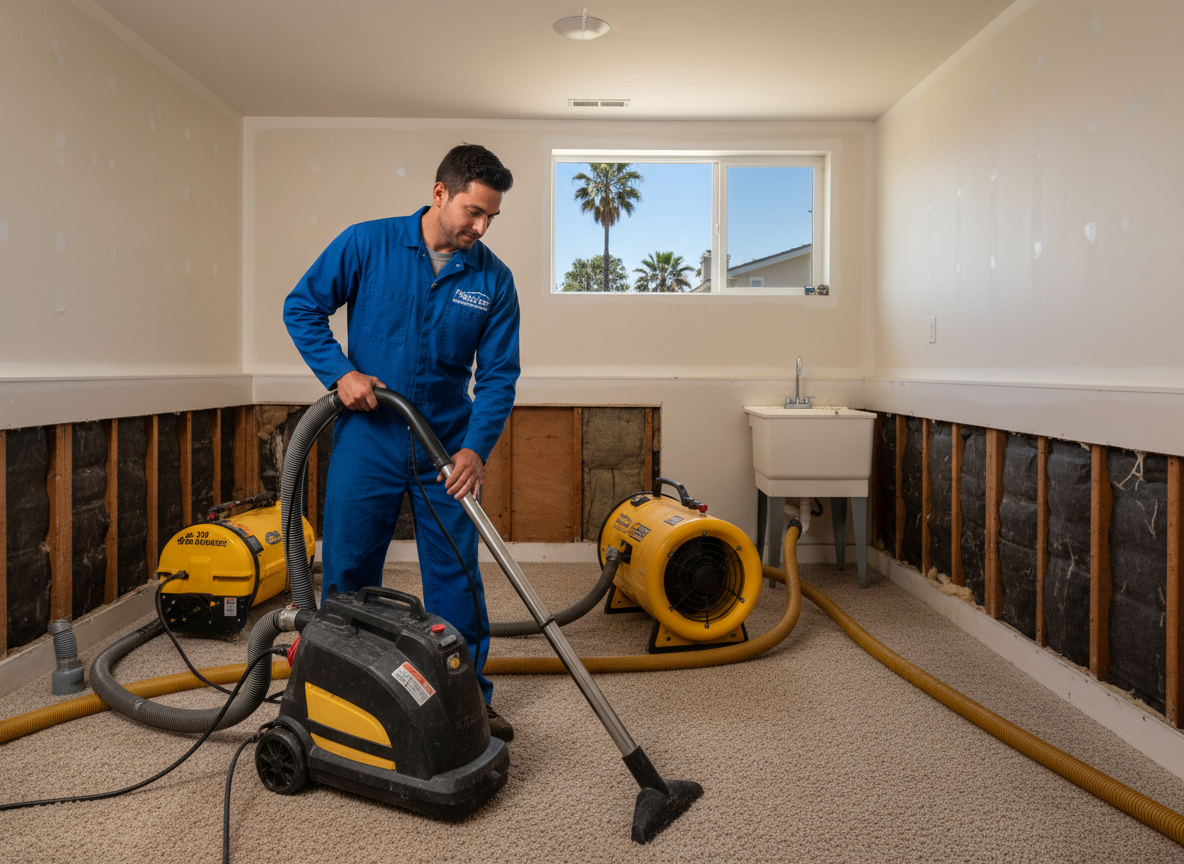
La Jolla's housing stock ranges from 1950s ranch homes in the Muirlands to mid-century builds near Mount Soledad and newer construction along Torrey Pines. These structures often feature plaster or drywall over wood framing that traps moisture after roof leaks or appliance failures. Salt-laden air accelerates corrosion on metal components once water enters wall cavities, so mitigation crews must map moisture with thermal imaging rather than relying on surface readings alone. The area's Mediterranean climate keeps relative humidity moderate most of the year, yet cool marine layers can slow natural evaporation, requiring aggressive dehumidification to prevent secondary mold growth inside enclosed spaces.
Water intrusion from La Jolla Shores Beach proximity or hillside runoff in Upper La Jolla frequently travels under slab foundations before surfacing in adjacent rooms. Mitigation therefore includes removing baseboards, drilling weep holes in stucco, and placing air movers to create negative pressure that pulls moisture outward. Crews working near Scripps Pier or Birch Aquarium properties routinely encounter high groundwater tables that complicate drying timelines. Without prompt extraction and continuous monitoring, residual moisture migrates into subfloors and cabinetry, turning a contained leak into widespread structural damage that affects neighboring units in La Jolla Village condominiums.
San Diego County building practices in Windansea and Bird Rock emphasize older plumbing that can fail without warning during rare heavy winter rains. Mitigation protocols call for isolating affected zones with containment barriers to protect unaffected living areas while HEPA air scrubbers run continuously. Technicians document moisture levels at multiple depths in drywall and flooring before declaring an area dry, because coastal fog can reintroduce humidity overnight. This level of detail prevents callbacks and keeps insurance claims moving forward without disputes over hidden damage.
Technician insight
In La Jolla, the thing that catches most people out with water damage mitigation is how quickly salt air corrodes copper pipes and electrical boxes once moisture sits inside 1960s plaster walls in the Muirlands. Homeowners often stop at surface drying and miss the hidden pockets under tile in La Jolla Shores bathrooms that keep feeding mold for weeks.
Hidden moisture under La Jolla Shores kitchen
A dishwasher leak had traveled under the slab and wicked into adjacent hardwood. Thermal scans revealed elevated readings two feet beyond the visible water line. We pulled baseboards, installed weep holes, and ran targeted drying for five days until readings matched unaffected rooms. The homeowner avoided full floor replacement and the claim closed without additional supplements.
How it works
- 1
Initial Assessment
Technicians arrive within hours, locate the water source, and use moisture meters plus thermal cameras to chart affected materials in La Jolla homes.
- 2
Water Extraction
Standing water is removed with portable pumps and wands, followed by removal of saturated carpet pads and drywall sections to prevent further wicking.
- 3
Drying and Dehumidification
Industrial air movers and dehumidifiers are positioned to create directed airflow while daily moisture readings track progress in wall cavities and under floors.
- 4
Sanitation and Monitoring
Antimicrobial treatments are applied where needed, then equipment remains on site until readings confirm the structure has returned to pre-loss moisture levels.
Pricing
Pricing depends on affected square footage, depth of water intrusion, and number of drying days required; upfront quotes provided after on-site assessment.