2026-10-15 ·
How to Spot Hidden Water Damage in La Jolla Coastal Homes
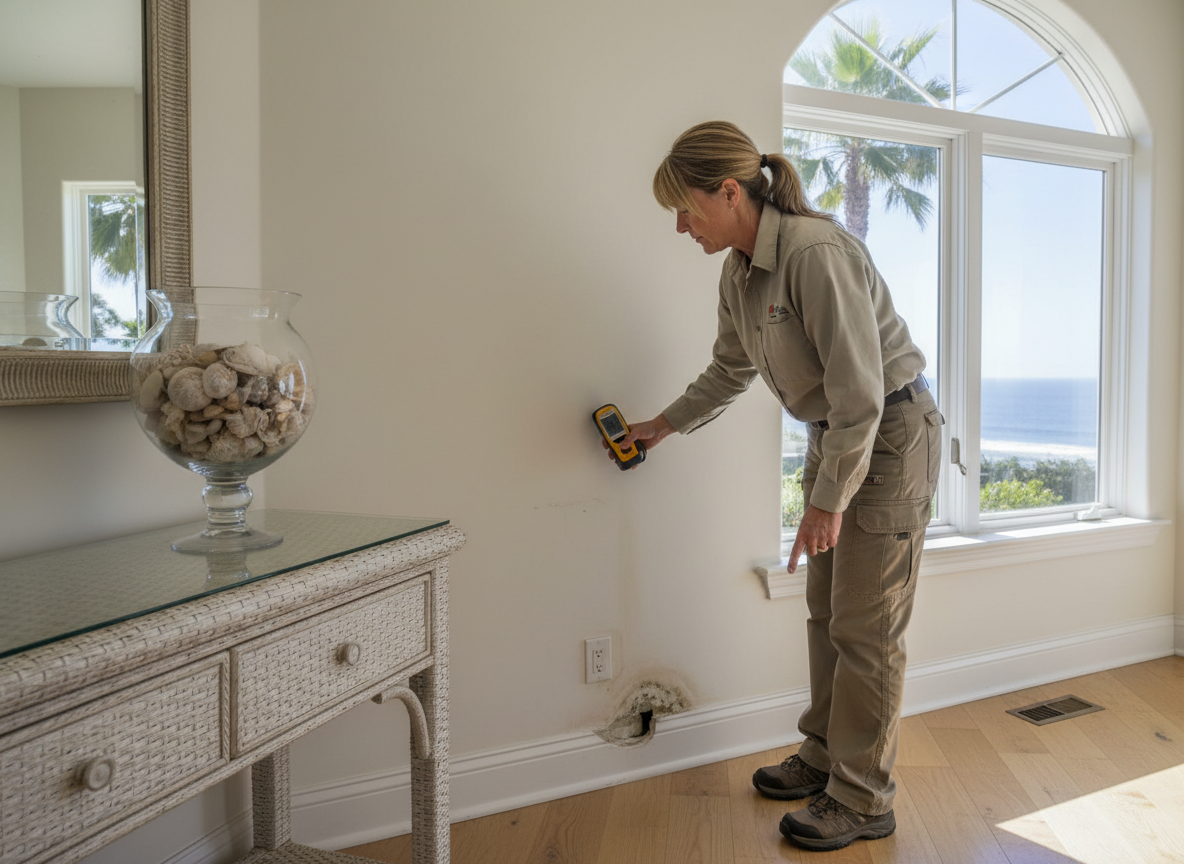
Hidden water damage in La Jolla coastal homes often shows first through musty odors near baseboards or slight discoloration on ceilings in homes built before 1980. Owners in La Jolla Shores, Bird Rock, and the Muirlands notice these clues after heavy winter rains or when ocean humidity lingers. Checking these signs early prevents larger problems that reach into La Jolla Village or Upper La Jolla properties.
Inspecting Attics and Crawl Spaces for Moisture
La Jolla homes near Mount Soledad and Torrey Pines frequently have crawl spaces that trap moisture from the mild Mediterranean coastal climate. Walk through the attic after sunset when temperatures drop and use a flashlight to look for dark streaks on insulation or rusted nails along roof sheathing. In older Bird Rock properties, check where HVAC ducts run close to the floor joists for condensation rings that indicate ongoing seepage. Pay attention to any soft spots in the subfloor above the crawl space, especially in La Jolla Shores Beach homes where salt air accelerates corrosion on metal straps. These inspections reveal damage that stays invisible from living areas yet affects structural wood within a few seasons.
Examining Walls and Ceilings in Coastal Construction
Plaster and drywall in La Jolla Village and Windansea homes can hide leaks from roof valleys or window flashing that fails after years of salt exposure. Run your hand along interior walls in upper floors for cool or damp patches, particularly below second-story bathrooms that sit above kitchens. In homes close to Scripps Pier or Birch Aquarium, check around exterior door frames where wind-driven rain pushes water behind stucco. Look for buckling baseboards or paint that bubbles near electrical outlets, signs that water has traveled along wiring runs. These checks catch problems before they reach UC San Diego area rentals or spread into adjacent San Diego neighborhoods.
Understanding How Local Climate and Terrain Influence Damage
The cool summers and rare extremes in San Diego County mean water lingers longer in soil around foundations in the Muirlands and Upper La Jolla. Homes on slopes toward La Jolla Cove see runoff collect against retaining walls during the few heavy rain events each year. This pattern differs from inland areas and leads to hidden saturation under slab floors or in garages. Property owners in these spots benefit from checking sump areas after any measurable rainfall and noting changes in soil level against the house.
When signs appear, review options such as water leak restoration or mold remediation after water damage to address the source directly. For next steps after locating a leak, read what to do after discovering a slab leak in La Jolla and handling mold risks after leaks in humid La Jolla homes.