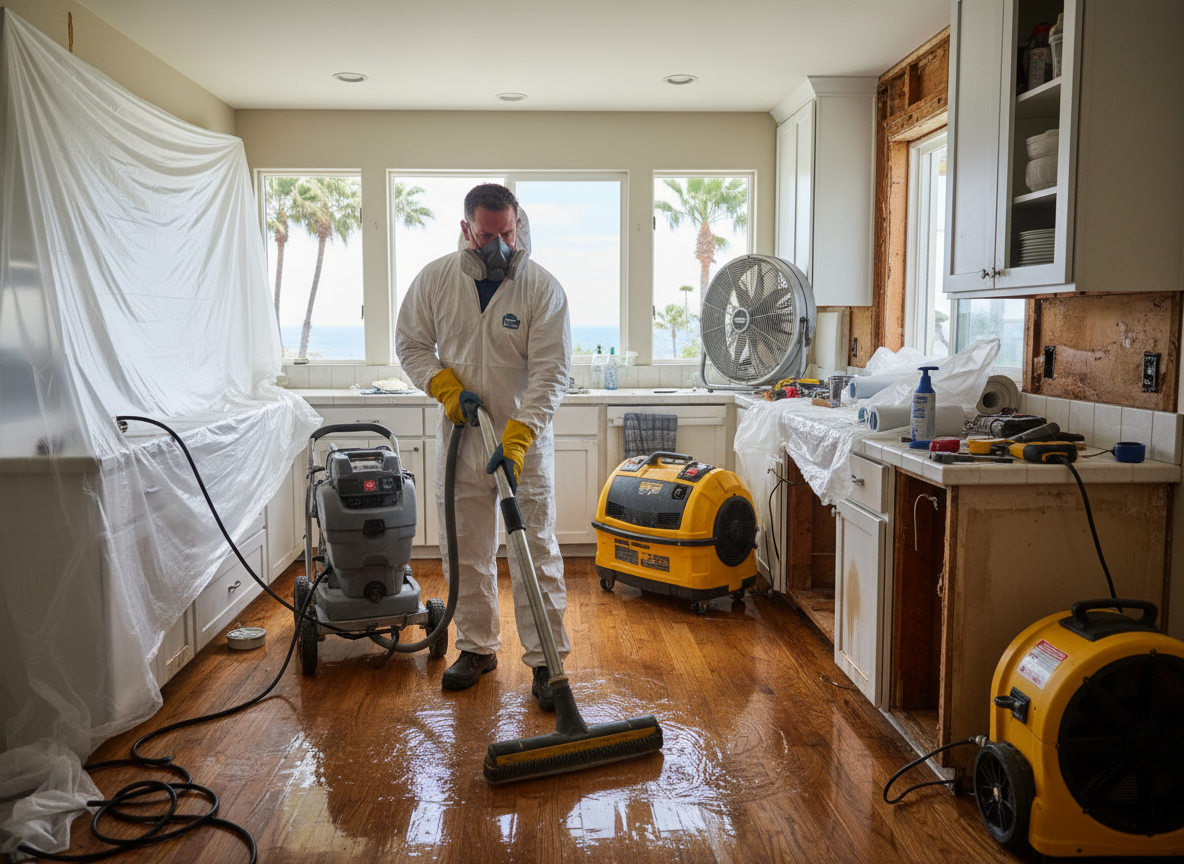
La Jolla homes range from mid-century builds in the Muirlands to older cottages near Windansea and La Jolla Cove. These structures often feature plaster walls, hardwood floors and raised foundations that trap water after roof leaks or appliance failures. Coastal humidity slows drying, so crews must use moisture meters and targeted extraction rather than surface fans alone. Work near Scripps Pier or Torrey Pines frequently involves salt-laden air that speeds corrosion in copper lines and metal ducts.
San Diego County building codes require proper documentation of moisture levels before drywall replacement, especially in Upper La Jolla and La Jolla Village where hillside drainage can push water under slabs. Technicians map affected zones room by room, then remove saturated insulation and treat framing to prevent hidden mold growth. Properties close to La Jolla Shores Beach face occasional tidal surge or heavy winter rain that travels along utility trenches, demanding longer drying times than inland jobs.
Response teams based at 7345 La Jolla Blvd reach Bird Rock and Del Mar within minutes because traffic patterns and narrow coastal roads are well known. Equipment includes commercial dehumidifiers sized for the square footage of typical La Jolla residences and air movers positioned to pull moisture from under floorboards without disturbing original tile or woodwork. Homeowners in Solana Beach and nearby areas often discover water only after it migrates from a second-story bathroom, requiring ceiling access points that preserve as much finish material as possible.
Technician insight
In La Jolla, the thing that catches most people out with water damage restoration near me is how the mild Mediterranean climate keeps humidity high enough that plaster and lathe walls never fully dry on their own. Older homes near Mount Soledad or La Jolla Shores often have multiple layers of flooring that hide moisture pockets until the job is already underway.
Hidden Leak Behind Shower in Bird Rock
Water migrated from a second-floor bathroom into the first-floor ceiling after a slow drain leak. Meters showed elevated readings extending into the hallway plaster. Crews opened limited access points, extracted water, ran drying equipment for four days and replaced only the affected sections while preserving the original tile floor.
How it works
- 1
Emergency Assessment
Technician arrives on site, identifies water source and maps moisture migration through floors, walls and ceilings using meters.
- 2
Water Extraction
Remove standing water with portable pumps and vacuums, then isolate wet materials to prevent further spread into unaffected rooms.
- 3
Drying and Monitoring
Place commercial drying equipment and return daily to check moisture readings until levels match unaffected areas of the home.
- 4
Restoration and Repairs
Replace damaged drywall, flooring and trim, then coordinate with licensed trades for any plumbing or electrical follow-up work.
Pricing
Pricing depends on affected square footage, depth of water intrusion and drying duration; upfront written quotes provided before work begins.