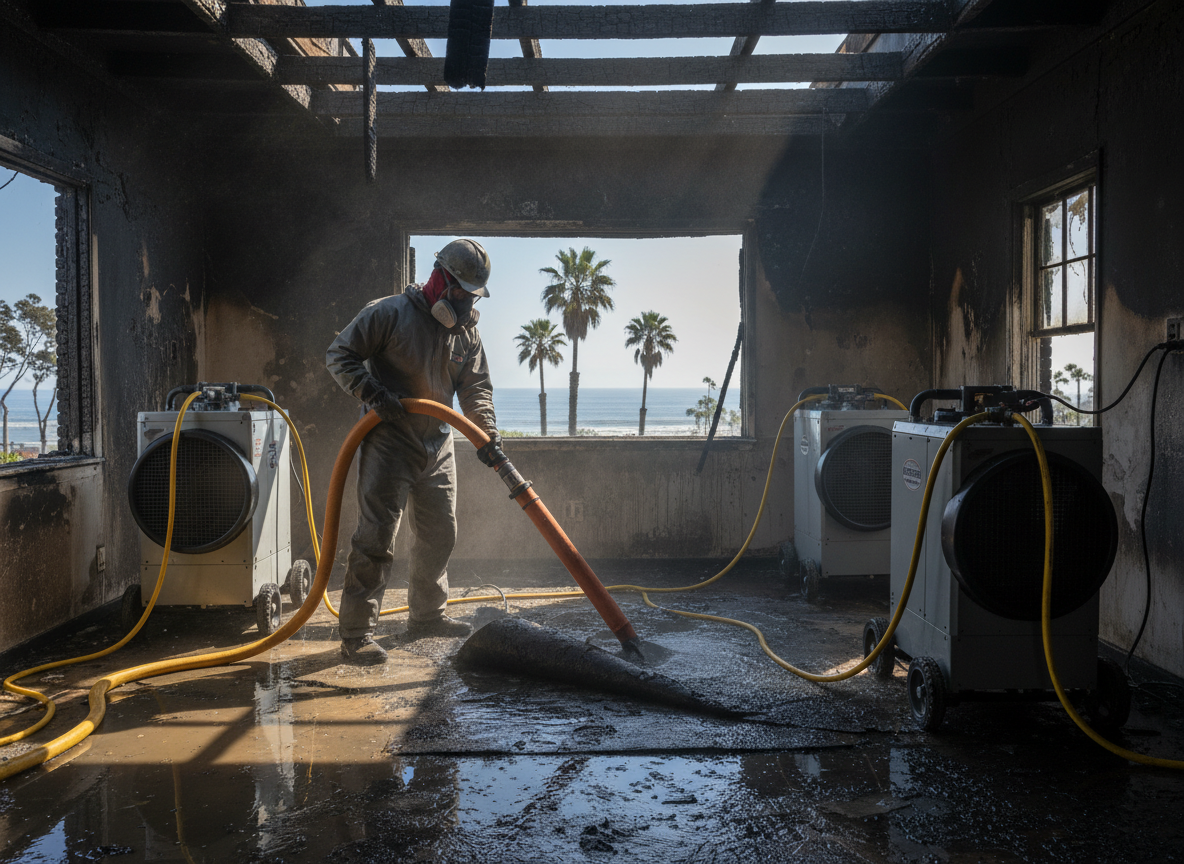
Firefighting efforts in La Jolla often introduce large volumes of water into older stucco and wood-frame homes common in the Muirlands and Upper La Jolla. This water quickly migrates through plaster walls and under hardwood floors, especially in hillside properties near Mount Soledad where drainage patterns direct moisture toward foundations. Salt air from the nearby Pacific accelerates corrosion on metal lath and electrical components once saturation occurs, requiring targeted removal rather than simple drying.
In neighborhoods like Windansea and La Jolla Village, multi-story homes built before widespread use of vapor barriers trap moisture between layers of drywall and insulation. Technicians must open walls at specific heights to confirm hidden saturation, then deploy air movers and dehumidifiers calibrated for the mild Mediterranean climate that slows evaporation even on clear days. Failure to address residual moisture near La Jolla Cove properties can lead to secondary mold growth within 48 hours due to consistent coastal humidity.
Soot and smoke residues left after fires in Torrey Pines or near Scripps Pier bind to wet surfaces, creating acidic compounds that etch finishes and embed in porous materials like tile grout or carpet padding. Remediation includes HEPA vacuuming followed by antimicrobial application on affected structural members, with particular attention to HVAC systems that can redistribute particles throughout homes in La Jolla Shores and Bird Rock. All work follows San Diego County guidelines for disposal of contaminated debris.
Technician insight
In La Jolla, the thing that catches most people out with water damage remediation after fire is how quickly salt-laden air corrodes copper pipes and wiring once firefighting water saturates wall cavities in pre-1970 homes near La Jolla Shores Beach.
Muirlands Fire Suppression Water
Water from suppression efforts entered a 1960s stucco home in the Muirlands and traveled under oak flooring toward the foundation. Inspection revealed trapped moisture behind original plaster and corrosion starting on metal lath. Extraction, targeted wall openings, and extended drying prevented mold while preserving the structure.
How it works
- 1
Initial Assessment
Inspect all affected rooms, map water migration paths, and document soot levels using moisture meters and thermal imaging.
- 2
Water Extraction
Remove standing water from floors and cavities using portable extractors suited to older La Jolla flooring.
- 3
Drying and Monitoring
Place drying equipment and check moisture readings daily until levels match unaffected materials in the structure.
- 4
Soot and Residue Removal
Clean surfaces with appropriate agents, dispose of porous materials, and treat remaining structural elements.
- 5
Final Verification
Confirm dryness, odor elimination, and clearance for reconstruction in compliance with local building standards.
Pricing
Upfront quotes provided after on-site inspection; costs vary with home construction type and extent of hidden moisture in older La Jolla properties.