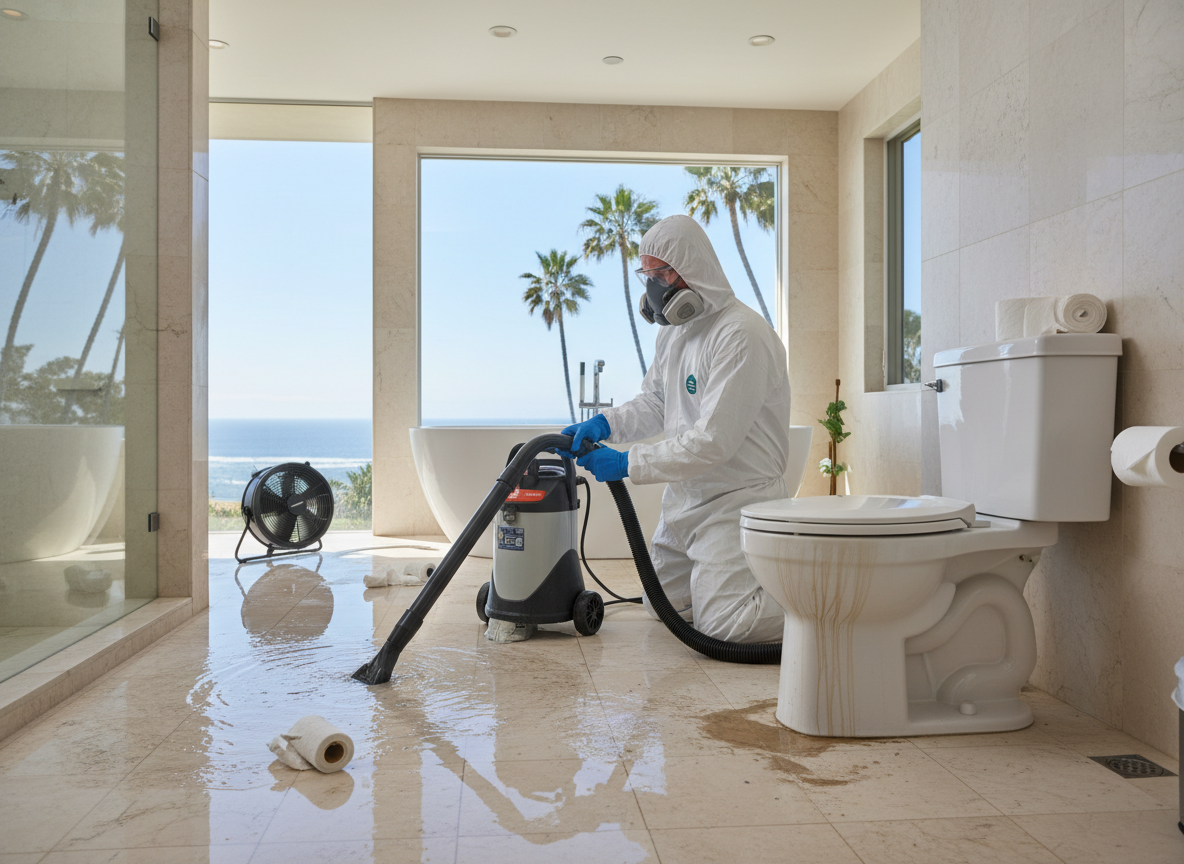
Toilet overflows in La Jolla often reach subfloors quickly in homes built on the coastal slopes of Muirlands or Upper La Jolla where older cast-iron drains meet modern tile. Water travels along the slab edges and into wall cavities before homeowners notice, especially when the mild Mediterranean climate keeps indoor humidity elevated even on cool summer days. Extraction must include moisture mapping under cabinets and behind baseboards because the rare but sudden winter rains can push already saturated soil against foundations in La Jolla Shores and Windansea.
Technicians use truck-mounted extraction followed by air movers and dehumidifiers sized for the square footage, paying special attention to the porous grout lines common in La Jolla Village condos. If the overflow reaches carpet pad or hardwood in Bird Rock bungalows, removal of those materials is required to prevent hidden mold growth along the cooler north-facing walls. All work follows San Diego County guidelines for Category 3 water, with containment barriers set up before any demolition begins.
After visible water is removed, crews place probes in the subfloor and monitor readings for several days because La Jolla's coastal air can slow natural drying. Homeowners in Torrey Pines and near Scripps Pier sometimes see secondary damage to nearby drywall when the original overflow went unnoticed overnight. Final clearance includes checking adjacent rooms and returning to confirm moisture levels have returned to normal before any reconstruction.
Technician insight
In La Jolla, the thing that catches most people out with Toilet overflow cleanup is how quickly water travels under the slab in pre-1970 homes around Mount Soledad; the coastal humidity keeps the concrete from releasing moisture fast, so one missed pocket behind a toe-kick can mean returning weeks later for mold remediation.
Bathroom Overflow in La Jolla Shores
A second-floor toilet overflow in a La Jolla Shores residence sent water through the subfloor into the first-floor ceiling. Inspection showed saturation along the joists and into an exterior wall facing the ocean. Extraction, targeted drying, and removal of affected drywall prevented further spread in the humid coastal air. The home was cleared and ready for repairs within five days.
How it works
- 1
On-site Assessment
Arrive within the hour, locate the source, and map all affected materials using moisture meters.
- 2
Water Extraction
Remove standing water from floors and surfaces with portable and truck-mounted equipment.
- 3
Drying and Monitoring
Place drying equipment and return daily to adjust settings until readings reach safe levels.
- 4
Sanitizing and Clearance
Apply antimicrobial treatment where needed and confirm the space is dry before any repairs.
Pricing
Pricing is quoted after inspection and depends on square footage, depth of water penetration, and number of drying days required.