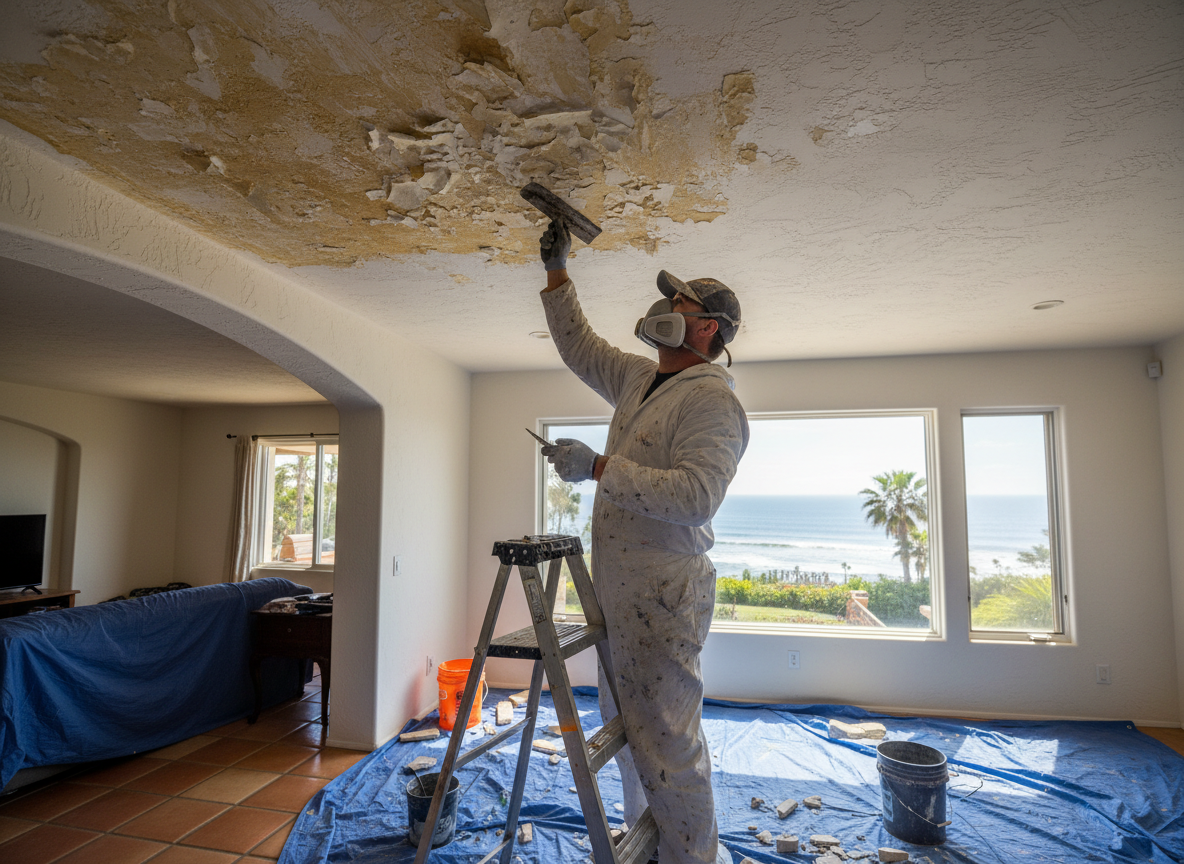
La Jolla's older housing stock in neighborhoods like Muirlands and Upper La Jolla often features plaster or lathe ceilings installed decades ago that absorb water differently than modern drywall. When leaks originate from roof penetrations near Scripps Pier or plumbing lines running through second floors, the damage spreads laterally along the ceiling plane before visible staining appears. Technicians must map moisture with thermal imaging because the mild Mediterranean climate keeps humidity elevated year-round, slowing natural drying and allowing hidden mold to establish in the void spaces above.
Access becomes the real variable on jobs in Windansea or Torrey Pines where homes sit on sloped lots. Removing sections of ceiling to reach saturated insulation requires careful shoring to avoid collapse, especially when salt air has already corroded metal lath. After extraction and drying, repairs must match the existing texture and thickness so the patch does not telegraph through once paint is applied. County building codes require permits for structural ceiling work in many La Jolla properties, and skipping this step creates problems during resale inspections.
Edge cases appear regularly in La Jolla Village and Bird Rock where multi-story condominiums share plumbing stacks. A leak on the floor above travels through common chases and shows up as ceiling damage several units away. Restoration crews coordinate with building management to isolate the source before any ceiling demolition begins, preventing repeat callbacks that occur when only the visible stain is addressed.
Technician insight
In La Jolla the thing that catches most people out with ceiling water damage repair is how the constant coastal humidity and older plaster in Muirlands homes lets moisture travel far beyond the visible stain. Homeowners often paint over the spot thinking the leak stopped, but the salt air keeps the hidden section wet for weeks longer than inland jobs.
Second-floor bath leak in La Jolla Shores
A slow drain leak above a first-floor bedroom ceiling went unnoticed until paint began to bubble. Inspection showed water had wicked along the plaster into the adjoining hallway. Crews isolated the drain, removed the saturated section, dried the cavity for four days, then reinstalled matching plaster and texture so the repair disappeared after painting.
How it works
- 1
Source Identification
Technicians inspect roofs, upper-floor plumbing, and HVAC lines using moisture meters and cameras to locate the entry point without unnecessary demolition.
- 2
Water Extraction and Drying
Standing water is removed and industrial dehumidifiers plus air movers are placed to pull moisture from plaster, insulation, and framing while monitoring daily readings.
- 3
Ceiling Removal and Containment
Affected sections are cut out in controlled stages with plastic sheeting and negative air to limit dust and prevent cross-contamination to living spaces below.
- 4
Repair and Finish Matching
New drywall or plaster is installed, taped, textured to match surrounding surfaces, and primed so the repair blends once final painting occurs.
Pricing
Upfront quotes provided after on-site inspection; final cost depends on ceiling height, access difficulty, and square footage requiring replacement.