La Jolla attics often develop mold when mild Mediterranean coastal air meets temperature swings in older homes built before modern ventilation standards. Properties in neighborhoods like Muirlands and Upper La Jolla frequently have limited soffit venting and single-layer insulation that traps humidity rising from the ocean. Salt-laden air from La Jolla Cove and Scripps Pier accelerates corrosion on metal fasteners and HVAC ducts, creating hidden moisture pockets that standard visual inspections miss.
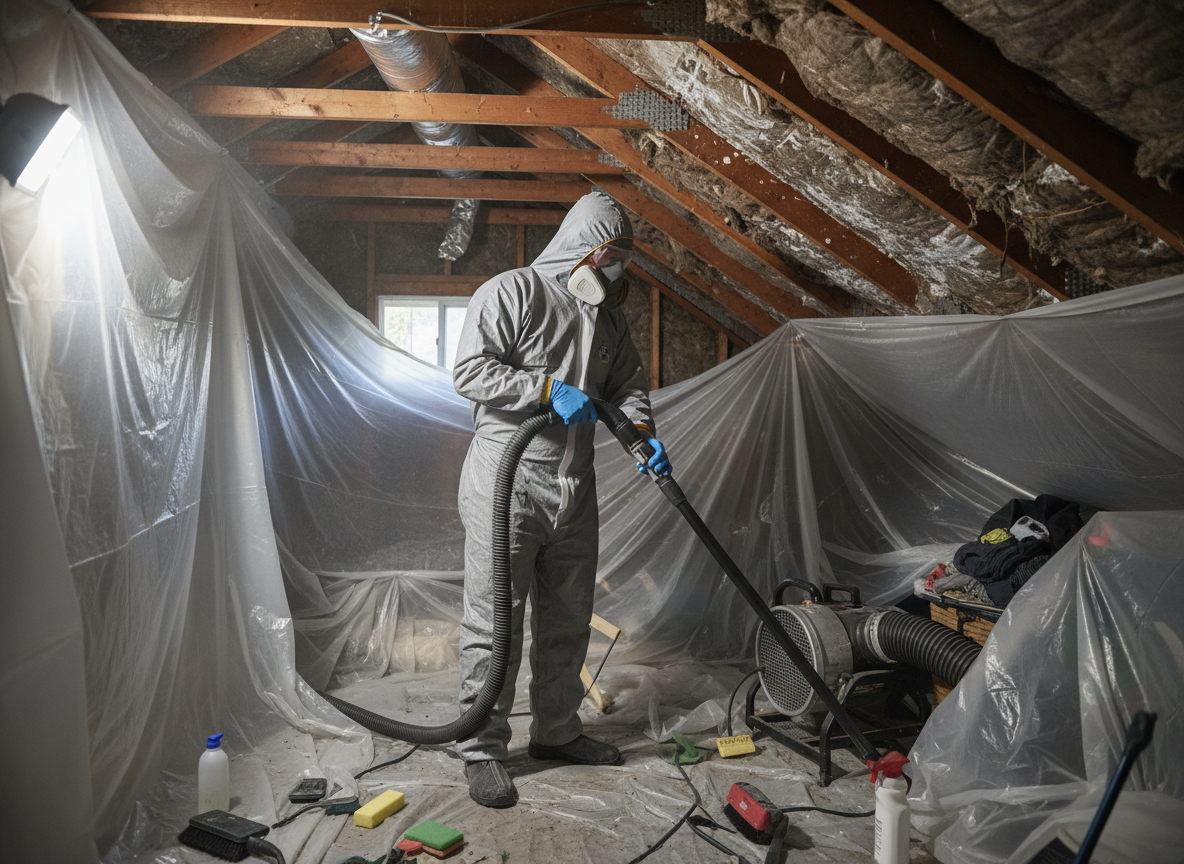
Remediation begins with negative-air containment to protect living spaces below, followed by HEPA filtration and removal of affected cellulose or fiberglass insulation. In Windansea and Torrey Pines homes, steep rooflines and limited attic access points require specialized scaffolding and sometimes roof deck removal. Technicians must also address condensation on bathroom exhaust fans that vent into unconditioned spaces, a common failure point in San Diego County coastal builds.
After source removal, antimicrobial treatments are applied only to structural wood that can be saved, while heavily saturated materials are discarded. Final clearance testing confirms spore counts match outdoor baselines before new insulation is installed. Homeowners near Mount Soledad or La Jolla Village often discover mold after roof leaks from rare winter rains combine with year-round ocean humidity, requiring coordination with roofing crews to prevent recurrence.
Seasonal Moisture Patterns
La Jolla's cool summers and infrequent but intense winter rains create attic condensation cycles that differ from inland San Diego neighborhoods. Homes near La Jolla Shores Beach see higher humidity intrusion through ridge vents during marine layer events, making proactive dehumidification critical during shoulder seasons.
Technician insight
In La Jolla, the thing that catches most people out with attic mold remediation is how the constant marine layer pushes humidity through ridge vents into attics with poor cross-ventilation, especially in 1960s-1970s homes in Bird Rock and the Muirlands where original insulation has settled and created cold spots along the roof deck.
Hidden Mold After Roof Leak in Bird Rock
A homeowner in Bird Rock noticed musty odors after winter rains. Inspection revealed water tracking along rafters from a small roof penetration near La Jolla Blvd, saturating cellulose insulation and growing mold on OSB sheathing. Containment was set, wet materials removed, and the attic dried before new insulation and vent upgrades were installed to handle ongoing coastal humidity.
How it works
- 1
Inspection and Moisture Mapping
Technicians use moisture meters and thermal imaging to locate hidden water intrusion in attics above La Jolla homes without disturbing finished ceilings.
- 2
Containment Setup
Negative pressure zones and HEPA air scrubbers isolate the attic from living areas to prevent spore migration into spaces below.
- 3
Mold Removal and Material Disposal
Affected insulation and drywall are removed, bagged, and disposed of while structural wood is cleaned and treated where salvageable.
- 4
Drying and Verification
Industrial dehumidifiers and air movers dry the space, followed by post-remediation air sampling to confirm clearance before re-insulation.
Pricing
Costs depend on attic size, extent of hidden damage, and access difficulty common in La Jolla's older hillside homes.